
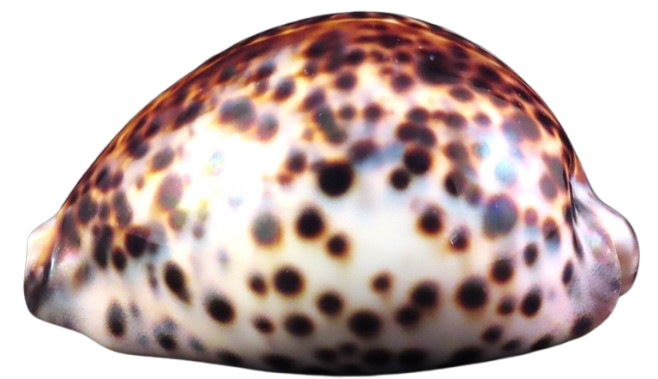
The Tiger Cowrie (Cypraea tigris) is one of the largest and most famous species of marine snails in the family Cypraeidae. Widely recognized for its high-gloss, porcelain-like shell decorated with distinct spotted patterns, this iconic gastropod plays an important role as a nocturnal scavenger and algae eater across tropical coral reefs in the Indo-Pacific region.
Unique Morphology & Appearance
Reaching impressive sizes of 3 to 6 inches (7 to 15 cm) in shell length, Cypraea tigris features a thick, heavy, egg-shaped shell. Despite its common name, the pattern on the glossy top (dorsum) consists of dense, dark brown or black spots on a white, cream, or yellowish background rather than stripes. When active, the snail extends a fleshy, dark-colored mantle covered in fine branching projections (papillae) that fully wraps around the shell. This mantle secretes calcium carbonate, continually polishing the outer shell and keeping it free of algae and encrusting organisms.
Natural Habitat & Distribution
The Tiger Cowrie is native to the warm tropical waters of the Indo-Pacific Ocean, ranging from the eastern coast of Africa and the Red Sea across Micronesia, Hawaii, and Polynesia to the Great Barrier Reef. It typically inhabits shallow to moderate subtidal depths (1 to 35 meters), hiding under large coral boulders, inside reef caves, or along deep crevices during the day to avoid predators.
Diet & Ecological Behavior
Primarily a nocturnal feeder, the Tiger Cowrie emerges under the cover of darkness to forage across live rock and coral rubble. Its diet consists mainly of algae, organic detritus, encrusting sponges, and small invertebrates. Using its tooth-lined tongue (radula), it scrapes bio-films and marine growths clean from rock surfaces, serving as an effective natural cleaner within its ecosystem.
Aquarium Compatibility & Considerations
In an aquarium setting, the Tiger Cowrie is classified as Reef Safe with Caution. While young or smaller individuals are helpful algae grazers, large adult specimens require very spacious tanks (at least 70 to 100 gallons) with plenty of established live rock. If natural algae and detritus become scarce, hungry adults may graze on soft coral polyps, leather corals, or ornamental sponges, so supplemental feeding with seaweeds or sinking spirulina wafers is recommended.
ကျားသိုက် ခရုခွံ
ကျားသိုက် ခရုခွံ / ကျားသစ် ခရုခွံ (Cypraea tigris) သည် Cypraeidae မျိုးရင်းတွင် ပါဝင်သော အကြီးဆုံးနှင့် အထင်ရှားဆုံး ပင်လယ်ခရု မျိုးစိတ်တစ်ခု ဖြစ်ပါသည်။ ကြွေထည်ကဲ့သို့ ပြောင်လက်နေသော အခွံပေါ်တွင် အစက်အပြောက် ပုံစံဆန်းများ ပါရှိခြင်းကြောင့် ကျော်ကြားပြီး အင်ဒို-ပစိဖိတ် ဒေသ၏ အပူပိုင်း သန္တာကျောက်တန်းများတွင် ညဘက်၌ ထွက်၍ အစာရှာဖွေတတ်သော အရေးပါသည့် ပင်လယ်ခရုတစ်မျိုး ဖြစ်ပါသည်။
ထူးခြားသော ရူပသွင်ပြင်နှင့် သဏ္ဌာန်
Cypraea tigris သည် အခွံအလျား ၃ မှ ၆ လက်မ (၇ စင်တီမီတာမှ ၁၅ စင်တီမီတာ) အထိ ထူးခြားစွာ ကြီးထွားနိုင်ပြီး ထူထဲလေးလံသော ကြက်ဥပုံစံ အခွံမျိုး ရှိပါသည်။ “Tiger” (ကျား) ဟု အမည်ပေးထားသော်လည်း အခွံ၏ ပြောင်လက်နေသော အပေါ်မျက်နှာပြင်တွင် ကျားနံဘေး အစင်းများအစား အဖြူ၊ ခရင်မ် သို့မဟုတ် အဝါရောင် နောက်ခံပေါ်၌ အညိုရင့်ရောင်/အနက်ရောင် အစက်အပြောက်များ စိတ်စွာ ပါရှိပါသည်။ ခရုသည် လှုပ်ရှားသွားလာသည့်အခါ ‘Papillae’ ဟုခေါ်သော အဖုငယ်များပါသည့် ရောင်စုံ အမြှေးပါး (Mantle) ကို ဖြန့်ထုတ်၍ အခွံတစ်ခုလုံးကို ဖုံးအုပ်ထားတတ်ပါသည်။ ၎င်းအမြှေးပါးသည် ကယ်လ်စီယမ်ဓာတ်ကို စထုတ်ပေးပြီး အခွံကို အစဉ်မပြတ် ပွတ်တိုက်ပေးသဖြင့် ရေညှိများနှင့် အညစ်အကြေးများ မတင်ကျန်ဘေး ပြောင်လက်နေစေပါသည်။
သဘာဝနေထိုင်ရာ ပတ်ဝန်းကျင်နှင့် ပျံ့နှံ့ပုံ
ကျားသိုက် ခရုခွံများကို အာဖရိက အရှေ့ဘက်ကမ်းရိုးတန်း၊ ပင်လယ်နီမှသည် မိုက်ခရိုနီးရှား၊ ဟာဝိုင်ယီ၊ ပိုလီနီးရှားနှင့် သြစတြေးလျ ဂရိတ်ဘာရီယာရီးဖ် (Great Barrier Reef) အထိ အင်ဒို-ပစိဖိတ် သမုဒ္ဒရာ၏ နွေးထွေးသော ရေပြင်များတွင် တွေ့ရှိရပါသည်။ ၎င်းတို့သည် ရေတိမ်ပိုင်းမှ အလယ်အလတ် ရေနက်ပိုင်း (၁ မီတာမှ ၃၅ မီတာ) အထိ ကျက်စားကြပြီး၊ နေ့ဘက်တွင် သားရဲကောင်များရန်မှ လွတ်စေရန် သန္တာကျောက်တန်းကြီးများ၏ အောက်၊ ဂူများအတွင်း သို့မဟုတ် ကျောက်ကြားများတွင် ပုန်းအောင်းနေတတ်ကြပါသည်။
အစာအာဟာရနှင့် ဂေဟစနစ်ဆိုင်ရာ အလေ့အထ
ညဘက်တွင် အဓိက အစာရှာဖွေတတ်သည့် သတ္တဝါဖြစ်သဖြင့် အမှောင်ထုအောက်တွင် သန္တာကျောက်တန်းများနှင့် သဲပြင်များပေါ်၌ လှည့်လည်ကျက်စားပါသည်။ ၎င်းတို့၏ အဓိကအစာမှာ ရေညှိများ၊ ဇီဝအကြွင်းအကျန်များ၊ ရေမြှုပ်ကောင်များနှင့် ကျောရိုးမဲ့ သတ္တဝါငယ်များ ဖြစ်ကြပါသည်။ သွားများပါဝင်သော လျှာ (radula) ကို အသုံးပြု၍ ကျောက်ဆောင်များပေါ်မှ ရေညှိများကို ခြစ်ယူစားသုံးခြင်းဖြင့် သဘာဝပတ်ဝန်းကျင်ကို သန့်ရှင်းပေးသည့် အခန်းကဏ္ဍမှ ပါဝင်ပါသည်။
ငါးကန်တွင်း မွေးမြူရေးဆိုင်ရာ သဟဇာတဖြစ်မှု
မွေးမြူရေးကန်များတွင် ကျားသိုက် ခရုခွံကို သတိထား၍ သန္တာကန်တွင် မွေးမြူနိုင်သော မျိုးစိတ် (Reef Safe with Caution) အဖြစ် သတ်မှတ်ထားပါသည်။ အကောင်ငယ်စဉ်တွင် ရေညှိများကို ကောင်းစွာ သန့်ရှင်းပေးသော်လည်း အရွယ်ရောက်ပြီးသော အကောင်ကြီးများအတွက် အနည်းဆုံး ဂါလန် ၇၀ မှ ၁၀၀ ခန့်ရှိသော ကျယ်ဝန်းသည့် ကန်နှင့် လုံလောက်သော သဘာဝကျောက်ဆောင်များ လိုအပ်ပါသည်။ ကန်အတွင်း သဘာဝရေညှိများ နည်းပါးသွားပါက အကောင်ကြီးများသည် အပျော့စား သန္တာကောင်များကို ကိုက်ဖြတ် စားသုံးနိုင်သဖြင့် ပင်လယ်ရေညှိ ခြောက်များ သို့မဟုတ် အစာတောင့်များကို ဖြည့်စွက်ကျွေးမွေးပေးရန် လိုအပ်ပါသည်။